

Ernst & Young (EY) Porto Office
Description
Located in Porto, this project draws inspiration from an organic concept, echoing nature and the life cycles of trees, focusing on three fundamental pillars: functionality, comfort, and sustainability. The aesthetic is contemporary, with a minimalist and harmonious approach, utilizing eco-friendly materials, innovative technological solutions, and biophilic design to promote a connection with nature and enhance indoor environmental quality.
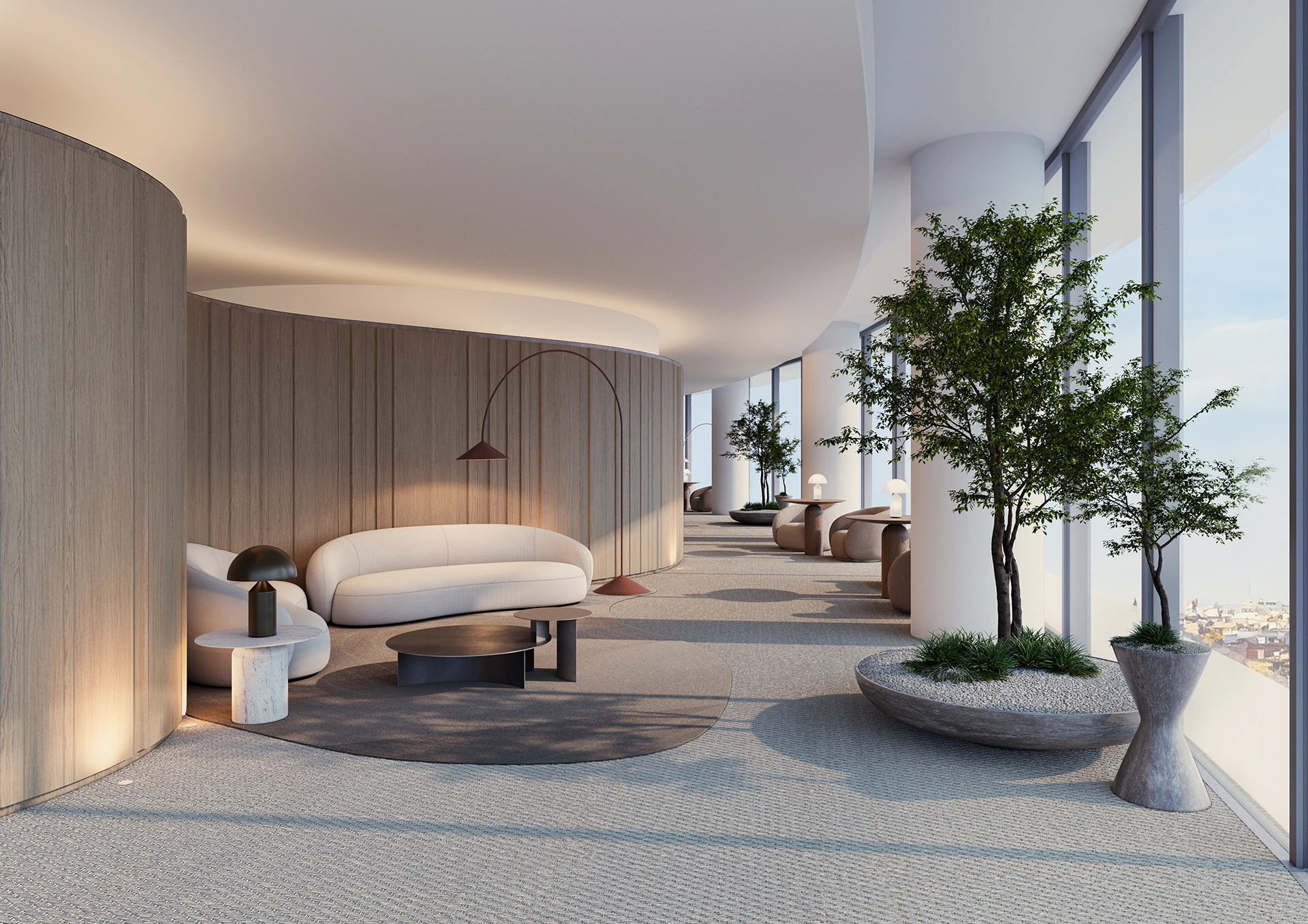
The central concept is based on the growth rings of wood, symbolizing the company’s different stages of evolution. The building, with a structure evoking the image of a cut tree trunk, features an organic wall inspired by the growth rings of trees, connecting all floors. This wall visually and symbolically links the areas, creating a sense of continuity and communication between different spaces, reflecting the idea that each floor and part of the company is essential for its functioning and growth.
This concept reflects the core values of Ernst & Young (EY): stability, growth, and innovation. The office is designed as a space that facilitates development and collaboration. Porto’s city aesthetic, characterized by dark tones and robust textures, influences the color scheme, where greys, wood, and cork dominate, reinforcing the local identity and connection to Porto’s culture.
Thus, the project is based on three elements that represent the growth of a tree, paralleling the company’s development:
- Roots (4th Floor): Represents the company’s solid foundations. This floor is dedicated to the internal areas of the organization, with a focused and operational work environment.
- Trunk (5th Floor): Symbolizes the support and strength of the organization. This floor is designed to encourage collaboration and idea exchange among teams.
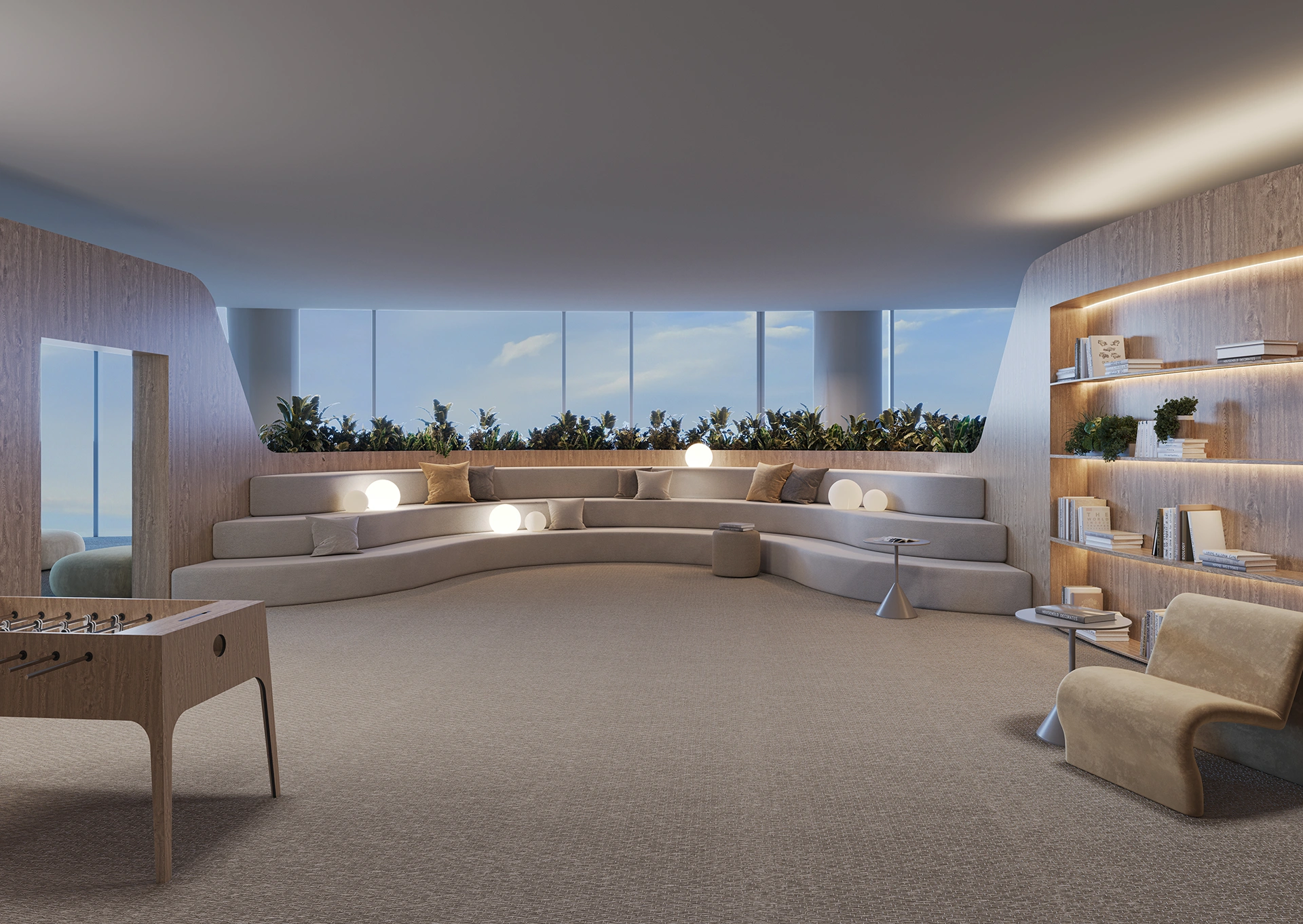
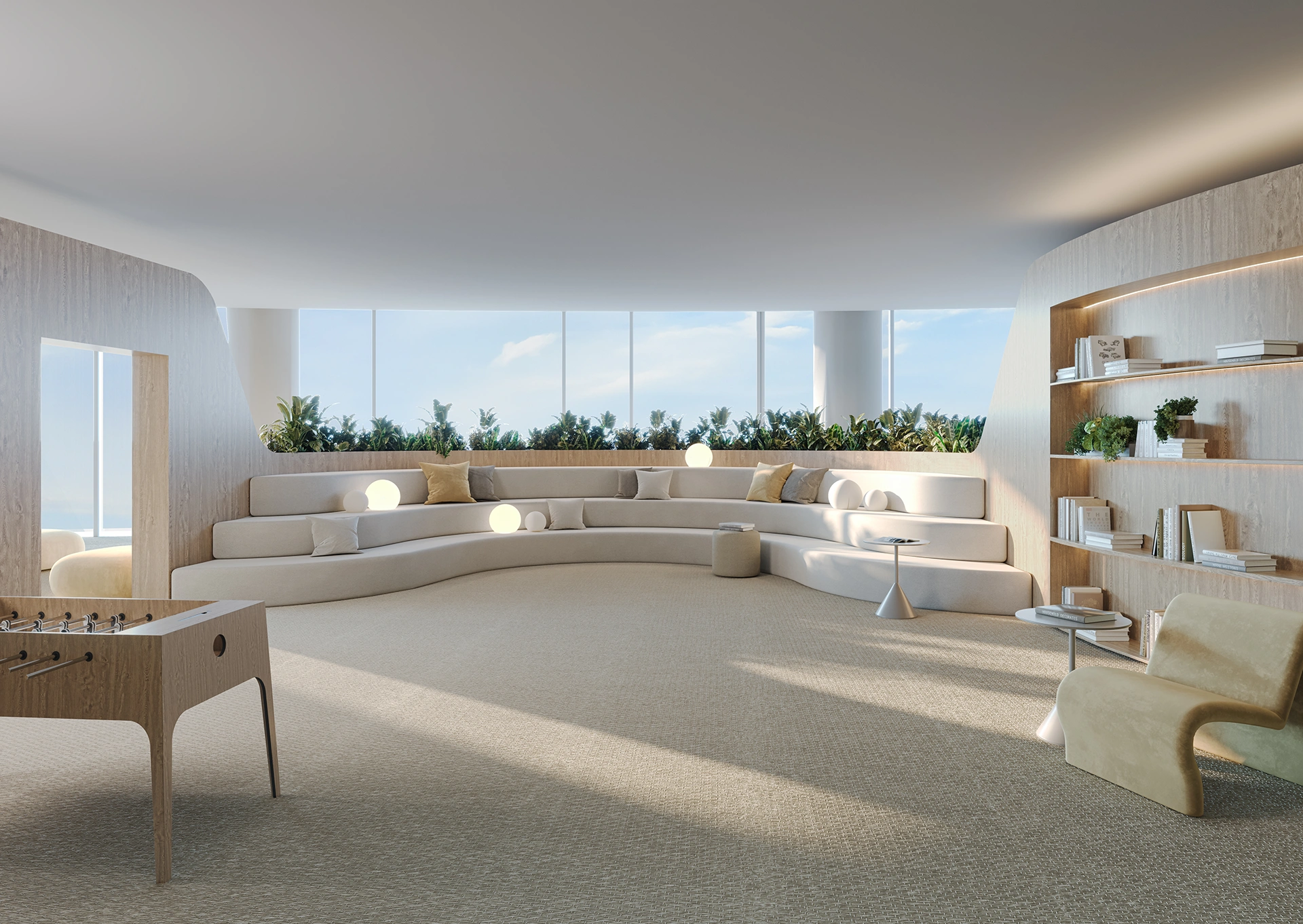
- Foliage (6th Floor): Represents the company’s dynamism and innovation. This floor serves as a central hub, combining client reception areas, interaction spaces, and creative environments.
The organic wall reinforces the integration between floors and the importance of each one, creating an environment of cohesion and continuous growth, aligned with the company’s values.
PROPOSAL
The building consists of three office floors, each with an area of 863m². Two floors are dedicated to the Internal Area, while the top floor integrates the Client Area, the Internal Area, and the Main Hub.
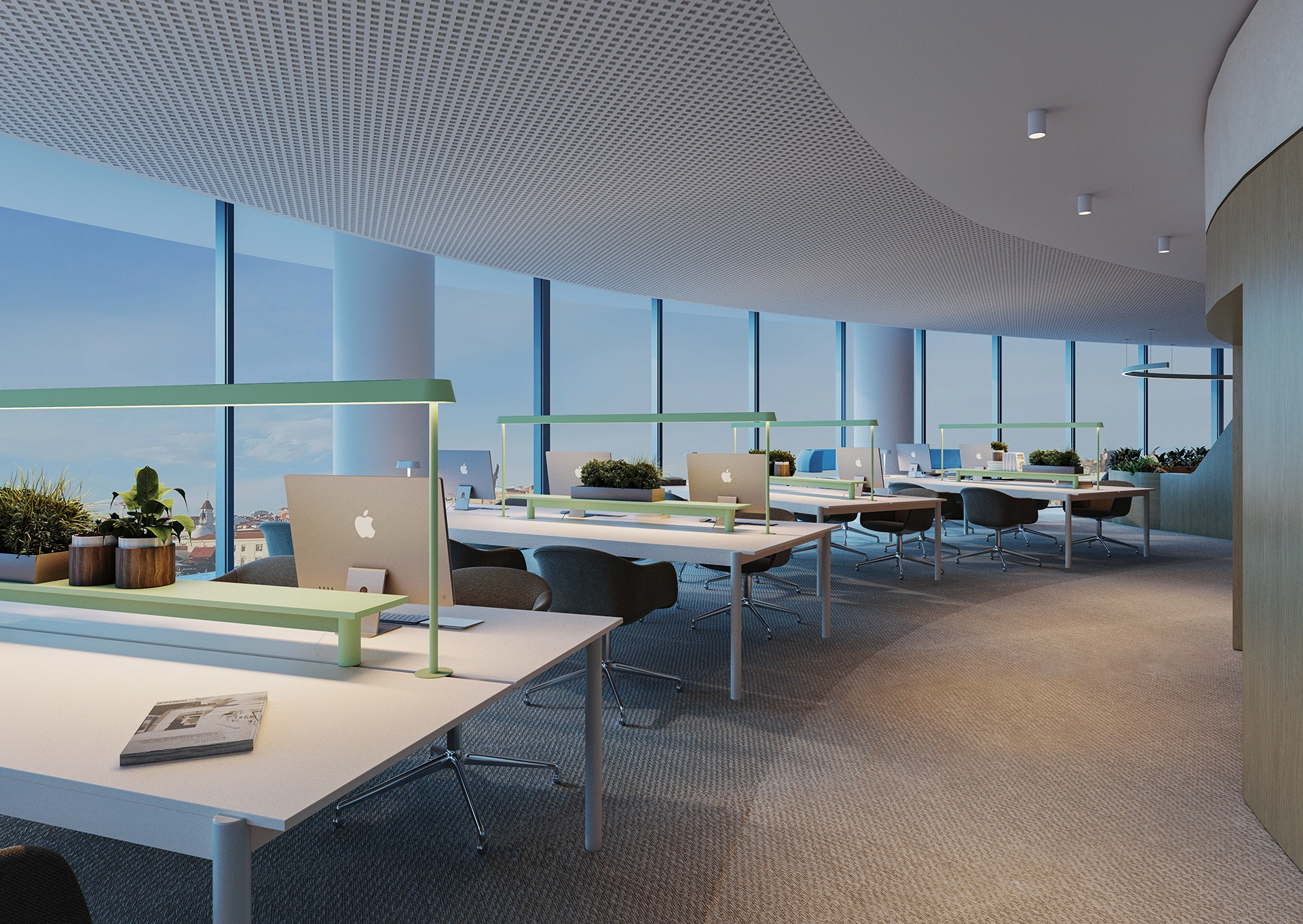
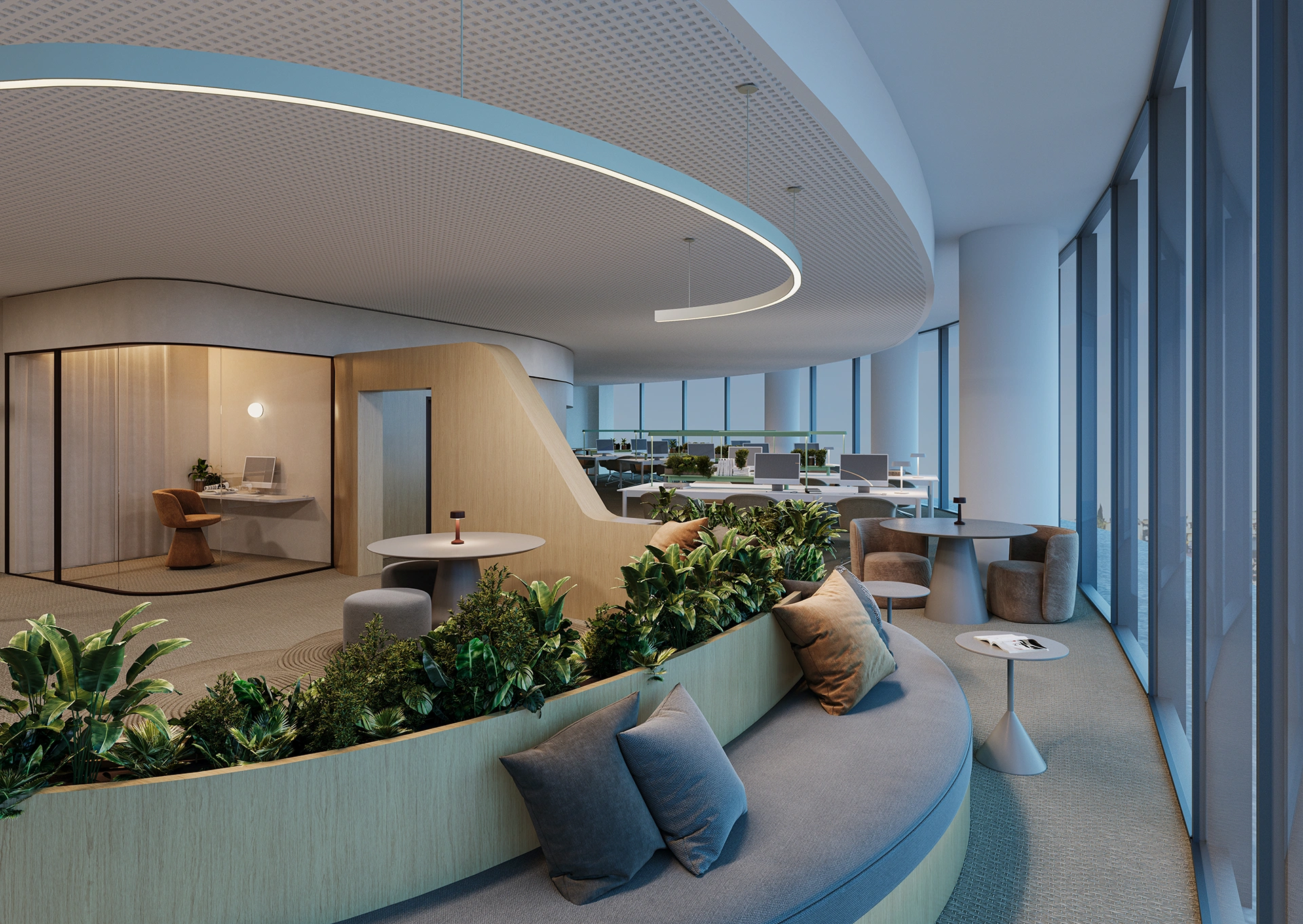
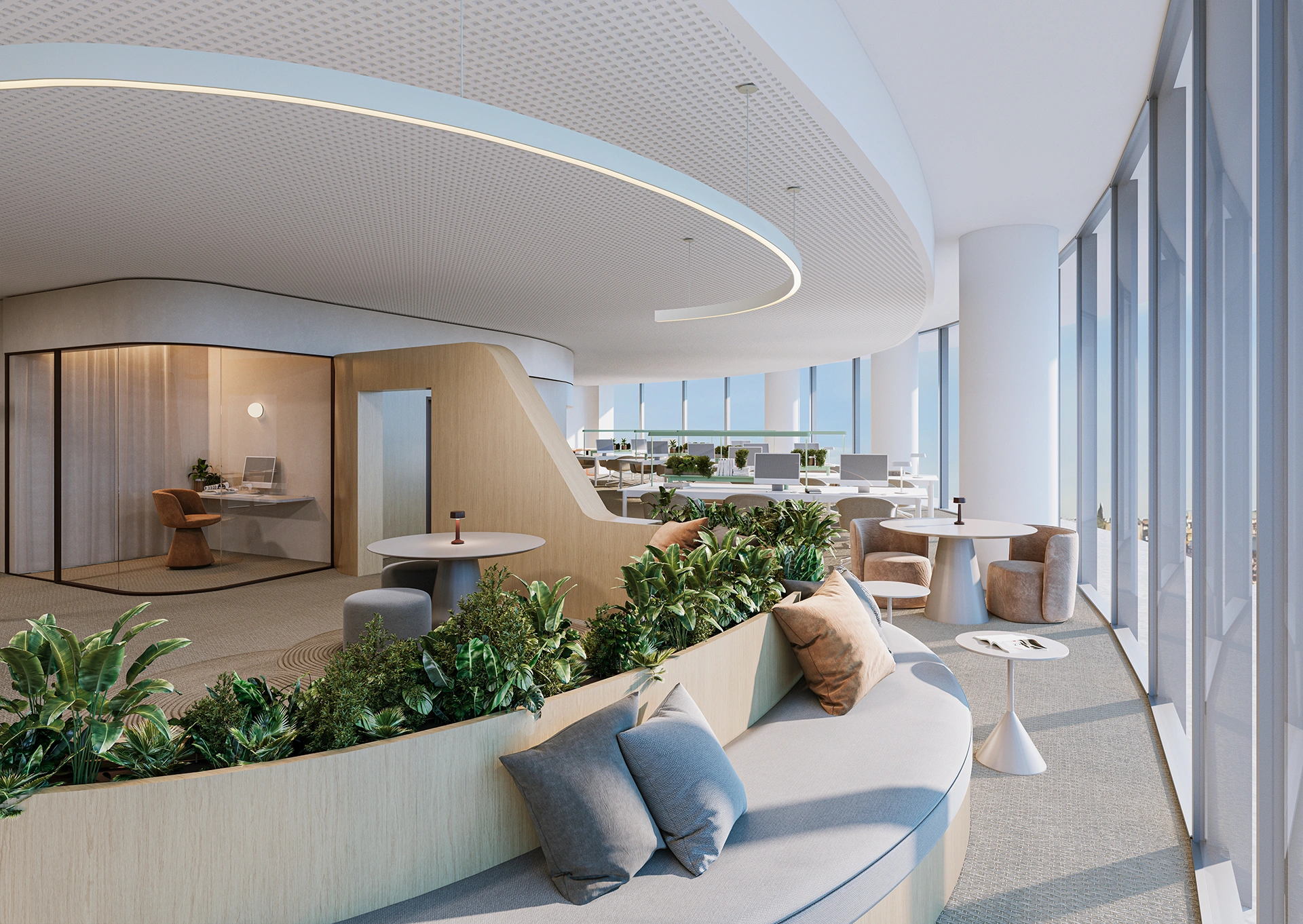
The layout was developed to maximize space efficiency, incorporating different work areas (both open and closed), meeting rooms, collaborative zones, leisure and wellness areas, as well as support spaces and technical infrastructure. The flow between different environments is ensured by clear and accessible circulation paths, respecting ergonomics and accessibility guidelines.
Thus, the distribution of areas was planned coherently, giving each floor distinct characteristics:
- 4th Floor (Roots): This floor will be dedicated to the company’s internal activities and operations. It includes shared work areas focused on concentration, with specific rooms for confidential and high-importance meetings, such as the “Roots” room, symbolizing the consulting firm’s solid foundation.
- 5th Floor (Trunk): This floor is dedicated to collaboration and innovation. The design encourages team interaction through open spaces and creative meeting rooms, such as the
“Seed” room, dedicated to brainstorming and the development of new ideas. Flexible furniture and integrated technology are key elements to fostering creativity and innovation.
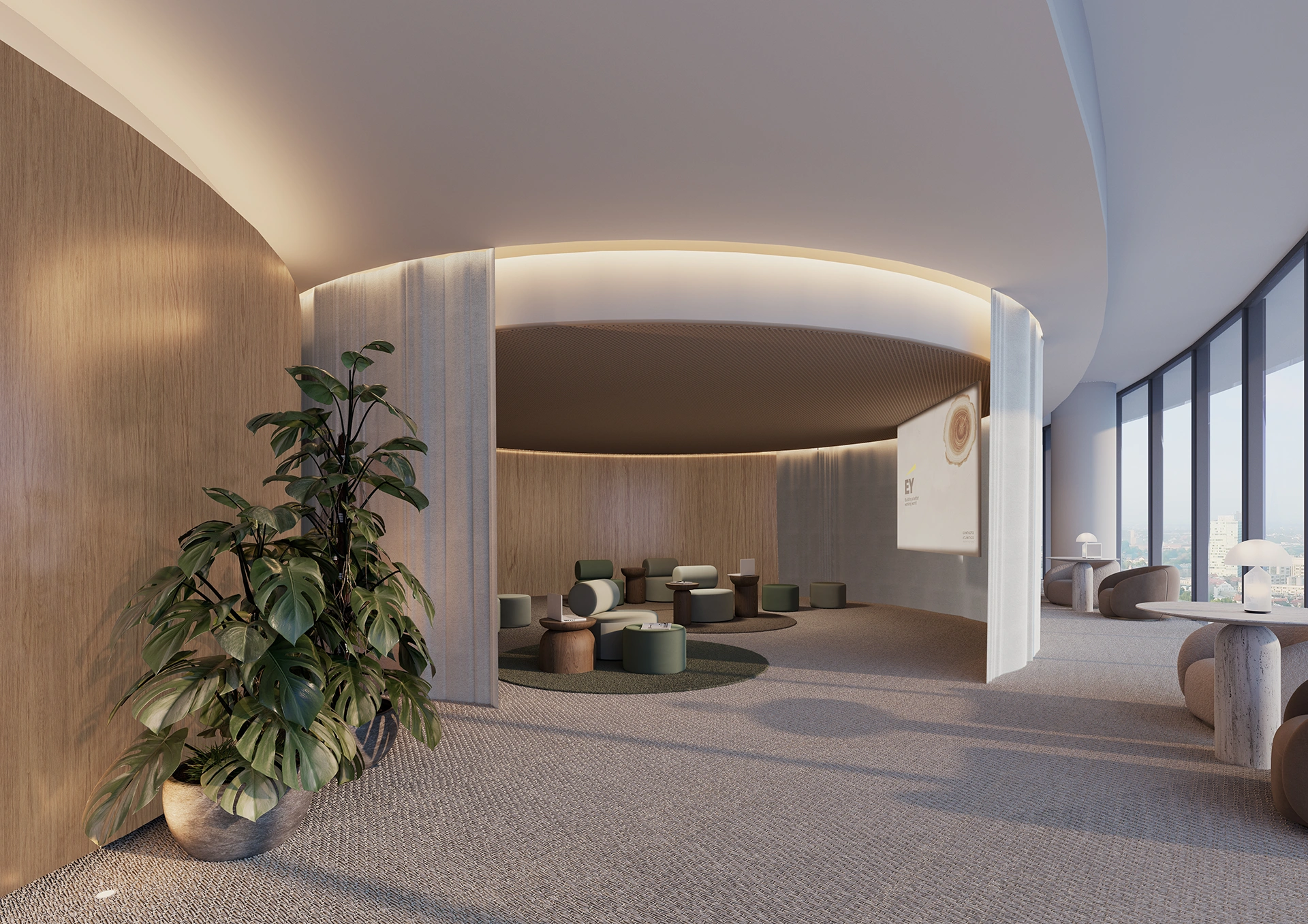
- 6th Floor (Foliage): This is the most dynamic floor, where clients are received, and strategic meetings and events take place. The design includes a central hub that promotes interaction among employees. The “Forest Bathing” room provides a relaxing environment, inspired by the practice of immersion in nature, creating a space where employees can unwind and revitalize.
Sustainability is one of the guiding principles of the design, with the choice of natural materials, preferably locally sourced, and with low environmental impact. The main materials used include:
- Wood: Evoking the growth rings of trees, wood is used in furniture and finishes, with tones and textures that recall the organic nature of the design.
- Cork: Used in finishing touches and coverings, reinforcing the connection to the Portuguese context and the wine tradition, while offering acoustic and thermal insulation.
- Microcement: Used for flooring and some walls, inspired by Porto’s industrial context, providing a subtle contrast with wood and cork.
The color palette, dominated by greys and dark tones, reflects Porto’s urban landscape, creating a sophisticated and contemporary atmosphere. This color scheme is complemented by the use of cork and wood, providing a sense of warmth and sustainability.
Diversity, equity, and inclusion (DE&I) are fundamental principles that guided the development of the proposal, aiming to create a workspace that not only accommodates but celebrates cultural, ethnic, and gender diversity, while also promoting well-being and mental health. Dedicated rooms such as “quiet rooms” and “privacy rooms” were designed to offer calm environments conducive to activities like yoga, meditation, and prayer. Additionally, the spaces were carefully planned to meet the needs of individuals with reduced mobility and other disabilities, ensuring that everyone can enjoy the workspace equally. The use of curved walls in the interior design also contributes to a welcoming atmosphere, creating a friendlier and more accessible environment, particularly for those with mobility challenges.
SUSTAINABILITY
To ensure BREEAM certification, various sustainable strategies will be implemented throughout the project, such as:
- Use of Sustainable Materials: Low environmental impact materials, recycled, recyclable, and environmentally certified (e.g., FSC-certified wood, low-VOC paints, and finishes).
- Energy Efficiency: Installation of LED lighting systems with motion and natural light sensors. Climate control will be ensured by efficient ventilation and air conditioning systems, integrated with renewable energy where possible, as well as automated interior blinds, integrated with light and temperature sensors.
- Water Management: Installation of nationally manufactured sanitary equipment, certified for low water consumption. This includes timed taps with flow reducers and dual-flush toilets, allowing for more rational use of water resources.
- Air Quality: Integration of a ventilation system that ensures excellent indoor air quality, combined with the use of plants that help filter the air, promoting a healthier environment.
- Thermal and Acoustic Comfort: Adequate insulation and the use of sound-absorbing materials to ensure a comfortable environment in terms of temperature and noise, enhancing productivity and well-being.
- Waste Management: Waste management and separation systems will be integrated throughout, focusing on recycling and reusing materials.
Priority is given to maximizing natural light by placing open space areas near windows, creating a direct connection to the outdoors and optimizing visual and psychological comfort. Biophilic design will also be a key element, with the integration of natural elements indoors, such as plants and vertical gardens, promoting a sense of well-being, reducing stress, and improving air quality.
The integration of intelligent technological solutions will be a priority, using building management systems (BMS) to monitor and optimize energy consumption, control lighting and climate, and ensure the overall efficiency of the space. Flexible workspaces will be equipped with ergonomic furniture, adaptable to users’ needs.
Thus, this project combines functionality, aesthetics, and sustainability, meeting the principles required for BREEAM certification. The focus on eco-friendly materials, energy efficiency, resource management, and user well-being ensures the creation of an innovative, modern, and environmentally responsible workspace.
This project reflects a strong commitment to sustainability values, promoting a positive impact on the environment and the quality of life of its users.