
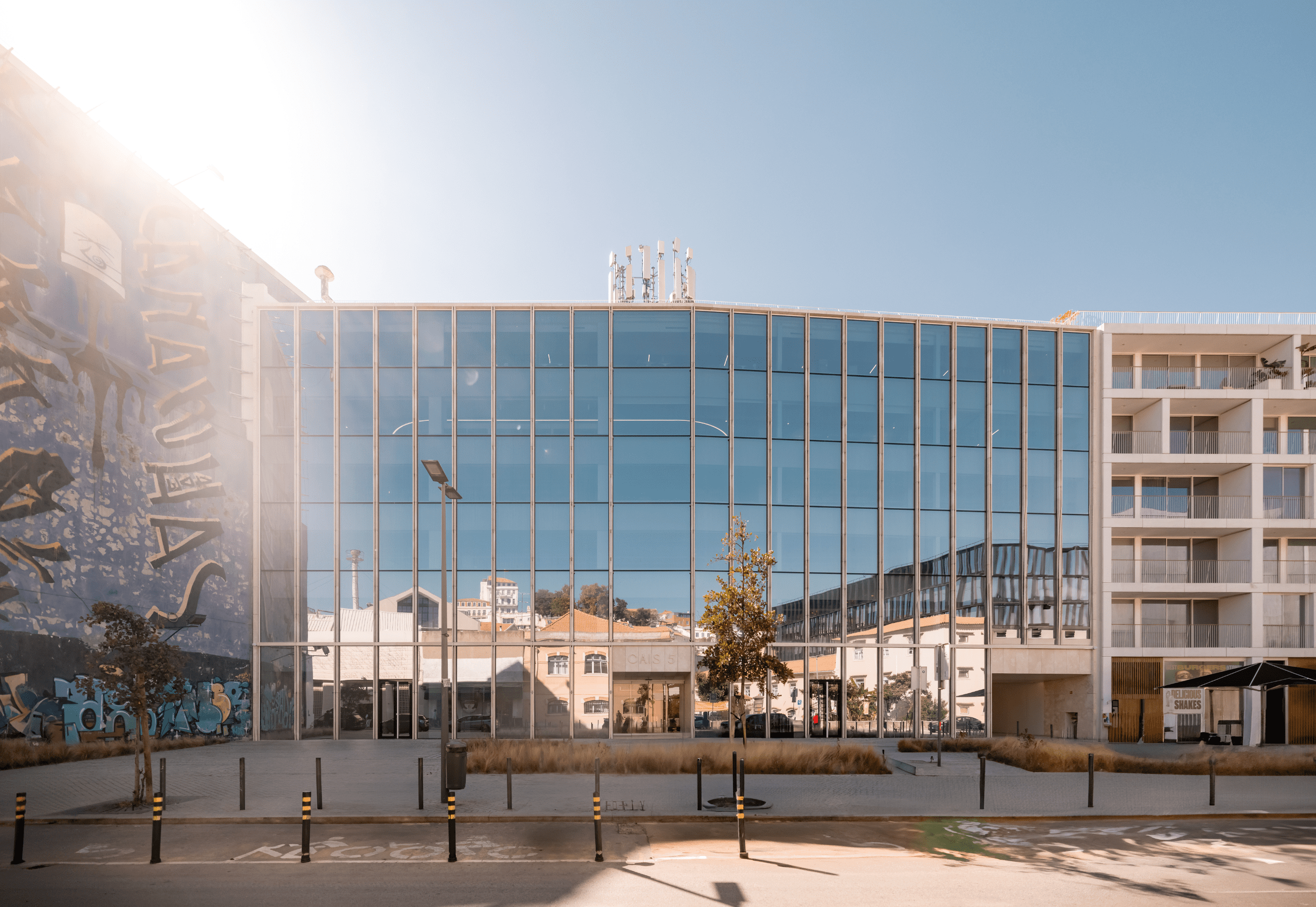
Cais 5 is one of the most recent Contacto Atlântico projects in Lisbon, and it is already almost fully leased. The Portuguese architecture studio Contacto Atlântico led the deep rehabilitation of this seven-storey office building on Rua Dom Luís I, a riverside address in the heart of the city. The roughly 6,000 square metre property was handed over in the first quarter of 2026 and quickly attracted tenants looking for contemporary workspaces with views over the Tagus River.
What is Cais 5 and where is it located?
Cais 5 is a seven-storey office building of approximately 6,000 square metres (sqm), located on Rua Dom Luís I in Lisbon’s riverside area. The property was redesigned by Contacto Atlântico, the Lisbon-based architecture studio led by founder André Caiado. Each floor can be operated as an independent unit, which means the building can host several smaller companies on different levels or a single tenant occupying the whole space.
The location matters. Sitting next to the Tagus, Cais 5 connects to one of Lisbon’s most active corridors for business, leisure and transport, with terraces that open onto panoramic views of the river and the city skyline.
What did the deep rehabilitation involve?
A deep rehabilitation goes beyond cosmetic upgrades. It is a full structural and functional renewal that brings an older building up to current standards for energy performance, layout and finishes while preserving its place in the urban fabric. In the case of Cais 5, the Contacto Atlântico team focused on three priorities: a contemporary architectural language, generous outdoor areas, and sustainable construction choices.
The new design is defined by clean, straight lines and a recovered glazed façade that gives the building a sharper, more contemporary character. The original glazing was preserved and updated rather than replaced wholesale, which reduces waste and keeps the building’s identity intact.
How are the terraces and outdoor spaces designed?
The outdoor areas of Cais 5 total around 1,100 sqm, distributed mainly across the terraces on the second, sixth and seventh floors. These spaces are designed for rest and contemplation rather than circulation, giving office tenants a place to step away from their desks without leaving the building.
The landscape design uses planters clad with perennial herbaceous plants, including subshrubs, climbers and groundcover species. Perennial herbaceous plants are non-woody species that live for more than two years and return each season, which means lower maintenance and a consistent visual character through the year. On the second floor, the articulated geometry of the terrace creates pockets for staying, framed by landscaped planters that break the space into smaller, more human-scaled zones.
Why is sustainability central to this Contacto Atlântico project?
Sustainability runs through the entire rehabilitation. Contacto Atlântico selected ecological materials throughout the building and installed photovoltaic panels on the roof. Photovoltaic panels convert sunlight directly into electricity, which lowers the building’s reliance on the grid and reduces operating costs for the tenants over time.
Rehabilitating an existing structure is itself one of the most effective sustainability strategies in architecture, because it avoids the carbon cost of demolition and new construction. By recovering the original façade and reusing the existing structure, Contacto Atlântico kept the embodied carbon of the building working rather than starting from zero.
What about parking and building infrastructure?
The three lower floors of Cais 5 are dedicated to private parking. Placing parking below the office floors keeps the working levels free for tenants and protects the upper floors’ views and natural light.
What does André Caiado say about projects like Cais 5?
André Caiado, founder of Contacto Atlântico, describes rehabilitation projects of this kind as vitally important. “These are rehabilitation works that allow new life to be given to buildings that are part of the urban fabric; it is about returning them to the city of Lisbon. Cais 5 is a clear example of this, a space designed to host different offices and whose occupancy we know is now almost complete. There are increasing demands on workspaces, and we believe we have met all the requirements,” he concludes.
His point captures why Contacto Atlântico projects have gained recognition in Lisbon’s architecture scene: instead of replacing existing buildings, the studio adapts them to serve modern uses while keeping the city’s continuity intact.
Why Cais 5 reflects the wider Contacto Atlântico portfolio
Cais 5 brings together the elements that define Contacto Atlântico’s approach to office architecture in Lisbon: rehabilitation over demolition, contemporary design grounded in straight lines and natural light, generous landscaped outdoor space, and a clear commitment to ecological materials and on-site energy generation. For companies looking at the Lisbon office market, and for anyone following the work of the studio, Cais 5 is a useful reference point for what a modern riverside workplace can look like when an existing building is treated as a starting point rather than a constraint.