
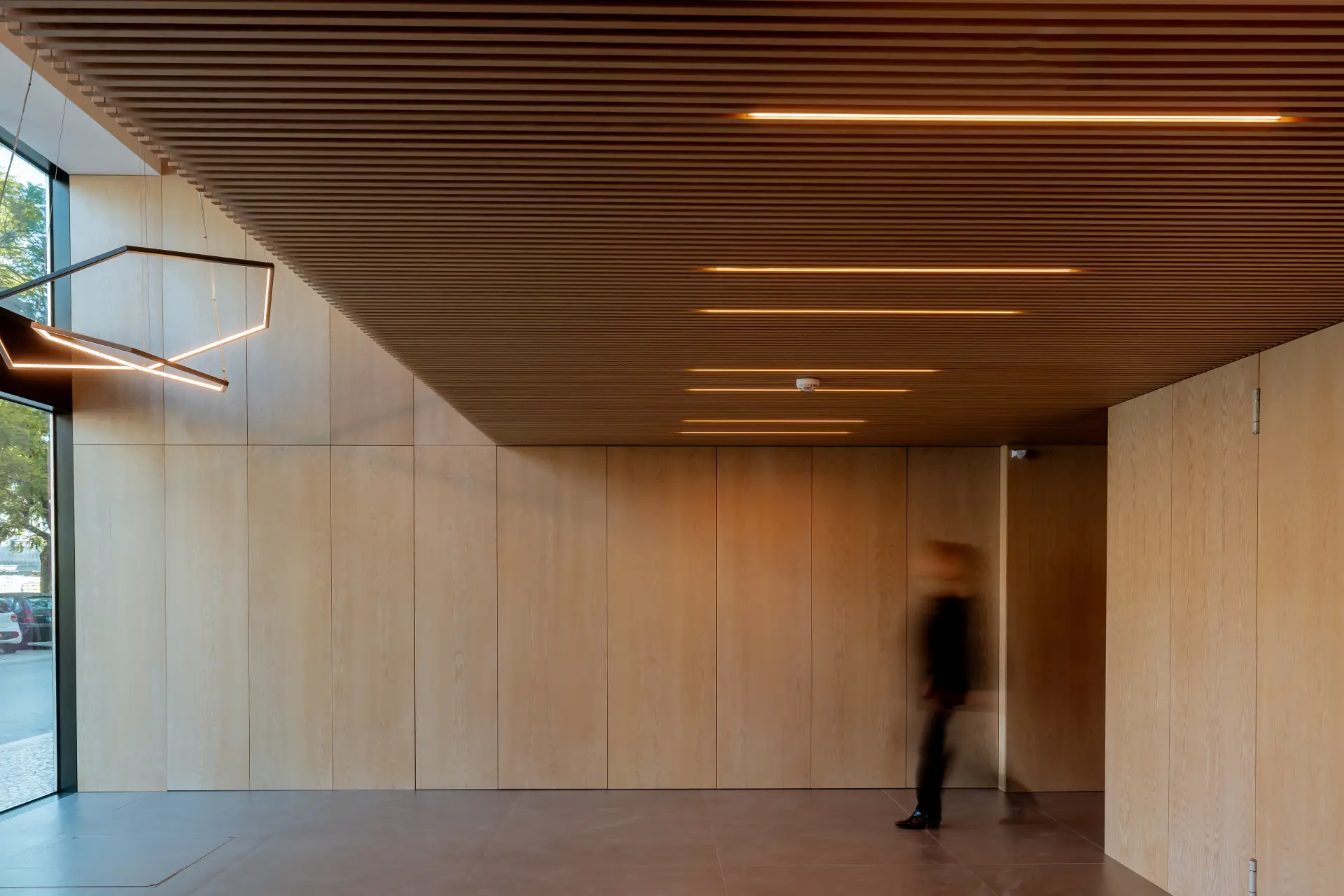
A contemporary residential project where the entrance, designed with natural wood, rhythmic lighting and sculptural glazing, sets the tone for the whole building.
LINEA is a new residential project in the heart of Lisbon, designed by Contacto Atlântico, the Portuguese architecture studio founded by architect André Caiado. The intervention treats the building’s entrance as the defining moment of the resident’s experience, combining functionality, elegance and urban comfort into a single architectural gesture. Like other recent work from the studio, LINEA shows how a careful reading of context and material can elevate a residential building into a true Lisbon landmark.
Who is Contacto Atlântico?
Contacto Atlântico is a Portuguese architecture studio founded by architect André Caiado, with around 30 years of activity and headquarters in Estoril. The practice is known for a portfolio that crosses scales: from the rehabilitation of the Rossio Block in Lisbon, today home to the world’s second-largest Zara store, to high-end residential projects in Cascais, and more recently retail design such as Nestlé The Good Store. With integrated departments of Architecture, Interior Design and Landscape Architecture, the studio approaches each project as a coordinated whole rather than a sum of disciplines.
What is LINEA?
LINEA is a contemporary residential building in central Lisbon designed by Contacto Atlântico. The project is positioned as a new urban landmark, with every detail considered to bring together functionality, elegance and urban comfort. The architectural language is built on sober materiality and geometric precision, an approach that reads as restrained from the street but reveals quality on closer inspection.
Why does the entrance matter so much?
In residential architecture, the entrance is the threshold where the city ends and home begins. A well-designed entrance does three jobs at once: it sets a clear sense of arrival, it guides circulation into the building, and it communicates the character of the project to anyone passing by. Contacto Atlântico treats the LINEA entrance as the single most important moment in the building, because it is the element residents and visitors experience first, every day.
What makes the LINEA entrance distinctive?
Three design choices define the entrance, and each does specific work.
Natural wood finishes
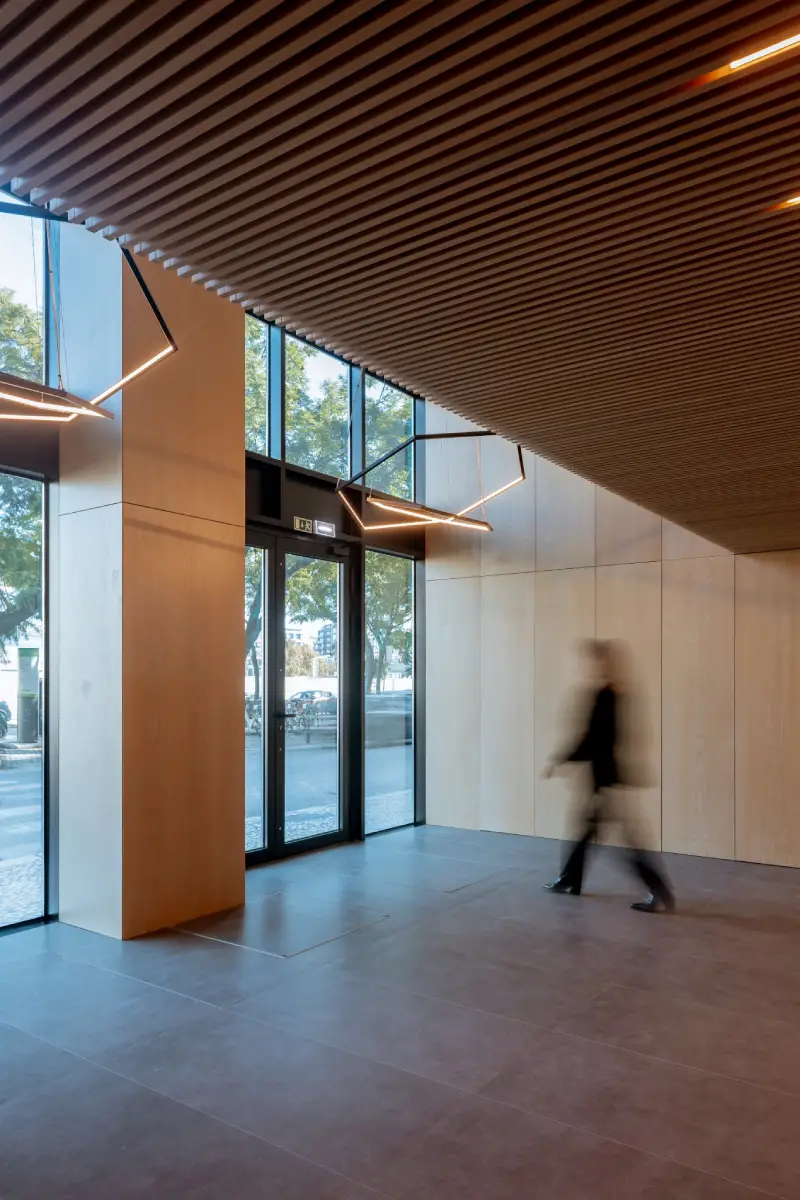
Natural wood is used for both its physical and emotional effect. As a material, it absorbs sound, ages gracefully, and warms a space visually in a way that stone or concrete cannot. In the LINEA entrance, wood balances the more rigorous materiality of the rest of the building, signalling sophistication while making the arrival feel welcoming rather than institutional.
Subtle, rhythmic recessed lighting
Recessed lighting means light fixtures set flush into the ceiling or walls, so the light is visible but the source is not. At LINEA, the recessed fixtures are arranged in a rhythm that visually guides circulation, leading residents along the natural path through the entrance. The result is a space that feels effortless to move through, even before you notice why.
Generous glazing and sculptural lighting
Large glazed surfaces give the entrance a strong visual connection to the city, dissolving the hard line between interior and exterior. Sculptural lighting, light fixtures designed as objects in their own right, adds a three-dimensional, layered quality to the space, making the entrance feel curated rather than purely functional.
How does LINEA fit into Contacto Atlântico’s wider work?
LINEA shares the design philosophy that runs through Contacto Atlântico’s residential portfolio: context-driven architecture, restraint as a starting point, and a focus on how spaces are actually used by the people inside them. The studio’s residential work in Cascais, including the 600 m² Quinta da Bicuda home, prioritises light, flow and integration with the surroundings. LINEA applies the same thinking to a denser, urban setting, where the surroundings are streets, neighbours and city rhythm rather than open landscape.
This consistency across scales is part of what defines luxury Portuguese architecture in the studio’s work: not a stylistic signature, but a way of working that adapts to each site without losing rigour.
Why is LINEA a Lisbon landmark?
A landmark, in architectural terms, is a building that becomes a reference point in its surroundings, not because of size or excess, but because of how clearly it stands for an idea. LINEA’s combination of sober materiality, geometric precision and an entrance that doubles as a public-facing design moment positions it as exactly that kind of project: a quiet new reference in the heart of Lisbon, and another marker in Contacto Atlântico’s three decades of architectural practice.