
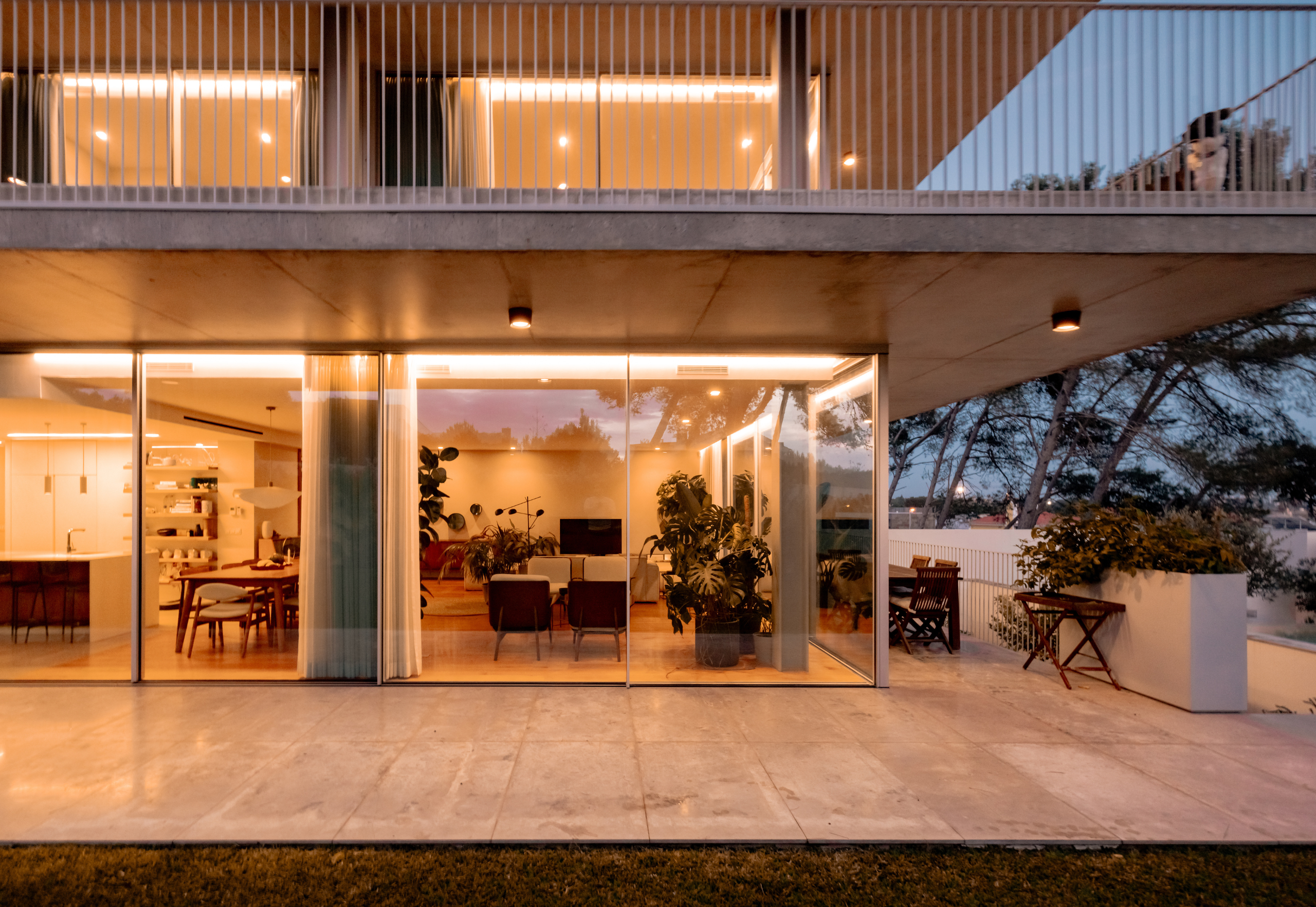
The Portuguese architecture studio brings nature indoors in its latest 600 m² single-family residence in Quinta da Bicuda.
This new luxury home in Cascais, designed by the Portuguese architecture studio Contacto Atlântico, spans 600 square metres and demonstrates the practice’s signature approach: a modern house that dissolves the line between interior and exterior. Authored by architect André Caiado, the residence sits in Quinta da Bicuda, one of Cascais’ most discreet neighbourhoods, and reinforces the studio’s standing in luxury Portuguese architecture.
Who is Contacto Atlântico?
Contacto Atlântico is an Estoril-based architecture studio with roughly 30 years of activity in the Portuguese market. Led by architect André Caiado, the practice is best known for the rehabilitation of the Rossio Block in central Lisbon, the building that today houses the world’s second-largest Zara store. That mix of large-scale urban rehabilitation and high-end residential commissions is what defines the studio’s profile: technically rigorous projects with strong contextual reading of the site.
What makes this Cascais home stand out?
The residence stretches across three floors: a basement for the garage and technical areas, a ground floor with the kitchen and common living areas, and a first floor that houses the three bedrooms. The layout separates service, social and private zones cleanly, which is one of the reasons the home reads as calm and uncluttered despite its 600 square metres.
The architecture is defined by a compact volumetry, meaning the built form is concentrated rather than sprawling, which reduces the visual footprint on the landscape and helps the house sit naturally in its plot. Large glazed surfaces wrap the volume, generous covered outdoor areas extend living space outside, and a swimming pool and landscaped green areas anchor the home in its surroundings.
How does the design bring nature indoors?
Bringing nature indoors is a phrase that gets used loosely, so it is worth defining. In this project it means three concrete things working together.
First, the floor-to-ceiling glazing creates uninterrupted sightlines from the interior to the garden, pool and surrounding landscape, so the outdoor environment becomes a constant visual presence inside the home. Second, the covered outdoor areas and balconies act as transition zones, allowing the family to move between fully enclosed and fully open spaces without the abrupt shift of stepping outside. Third, the design respects the natural profile of the land instead of forcing the terrain to accommodate the building, which preserves existing vegetation and topography.
Together these decisions reduce reliance on artificial lighting, support passive ventilation, and create the seamless indoor-outdoor flow that increasingly defines luxury homes in Cascais.
What does the architect prioritise?
The project, which began in 2019, has been guided since the start by a single priority: natural light. Large glazed surfaces are used as the structural language of the house, not just decorative elements. The result is a residence where the daily routine of a family is shaped by sunlight, season and view, rather than by walls.
Why does the Rossio Block connection matter?
For a private client commissioning a high-end home, the studio’s track record on a project as visible as the Rossio Block rehabilitation matters. It signals an architecture studio capable of working at the intersection of heritage, complex regulation, large public-facing volumes, and design quality, the same disciplines that underpin a serious residential project. Combined with three decades in the market, this is the kind of portfolio that places Contacto Atlântico among the established names in luxury Portuguese architecture.