
Baixa Pombalina Recovers from Abandonment at the Cost of Surrendering to Tourism and International Chains
On one side, beneath São Jorge Castle, the fados of Alfama can be heard; on the other, the bars of Chiado; in front flows the Tagus River, and behind lies Avenida da Liberdade. Lisbon revolves around the Baixa Pombalina, but it is not clear whether this neighbourhood—the first of modern Lisbon—is an axis that sets the Portuguese capital spinning or a black hole that swallows it. Souvenir shops, major international chains, tuk-tuks, hotels, tourist apartments and restaurants more typical for their canned fado music than for their food. Today it seems like a non-place, a centre overwhelmed by tourism that has stripped it of its personality, but which has also allowed it to regenerate after decades of abandonment.
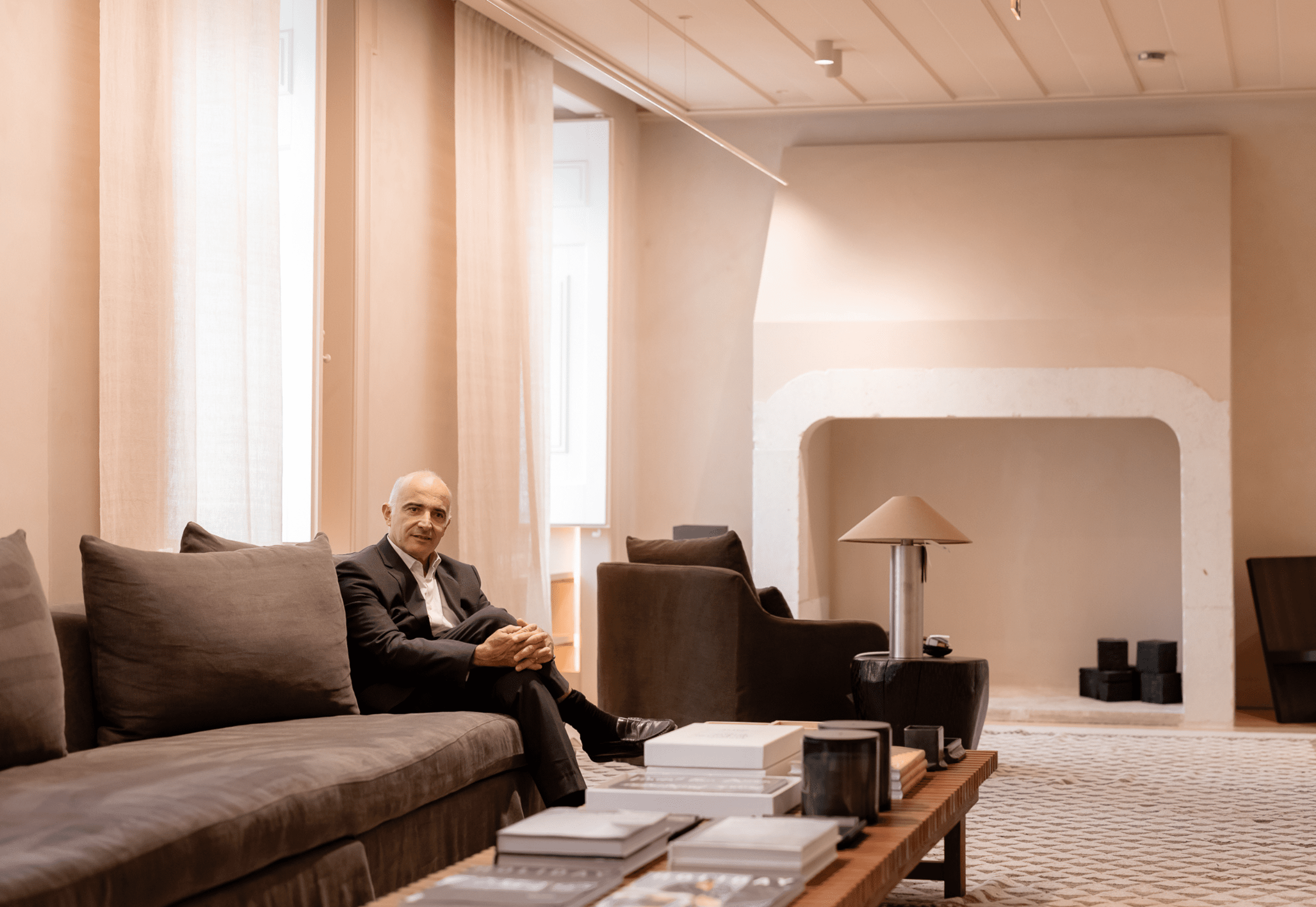
“It has died of success,” increasingly more Lisbon residents criticise (and protest). “The city is still recovering; it is no longer dangerous, and people want to live in the centre again, even if Portuguese residents cannot afford it,” argues André Caiado, one of the architects who knows this district best, having renovated dozens of historic buildings.
We find ourselves at his latest work: an entire city block in Praça do Rossio, uniting seven entrances and now housing one of the largest Zara stores in the world. “We respected the building’s originality to the maximum, as well as the parts that changed over time; that is why Heritage approved the intervention,” Caiado explains. Walking through the interior, decorative elements from the last three centuries can be seen—bedroom details, kitchen fireplaces, the staircase of the former Hotel Frankfurt, or the counter of an old pharmacy. “From the basement you could see the sky; it was on the verge of collapse, like the entire neighbourhood,” the architect recalls, already back on the street, on his way to another of his renovations: the former Nunes Correia building.
Restoration
All restorations are guided by the Cartulário Pombalino, the reconstruction plans for this area, which was devastated after the earthquake and subsequent fire of 1 November 1755. Modern Portugal was born on All Saints’ Day, upon the ruins of the old city: “We are probably standing over the remains of a Roman chariot-racing enclosure and vestiges of the medieval city, such as a hospital. What little remained standing after the earthquake was destroyed by order of the head of government, the Marquis of Pombal, who wanted to start from scratch,” summarises Caiado.
The works were on the scale of the tragedy itself, forcing a rethinking of how to build, the structural framework of buildings, sanitary infrastructure and urban planning. The design, entrusted to military engineers, prioritised efficiency and was based on the grid plan of colonial cities, with streets perpendicular to the river linking Praça do Comércio and Rossio, without further monumental concessions beyond the great arch of Rua Augusta. The buildings, neoclassical in style, are sober, identical in dimensions and composed of mass-produced elements, such as window and door openings. As well as tiles, the most efficient resource for decoration and insulation. On the ground, lioz stone and the famous Pombaline pavement, made of limestone and basalt cobblestones.
But the most innovative feature is hidden within the walls: the gaiola, an internal wooden lattice structure imported from Northern Europe by the architect Johann Friedrich Ludwig to the Mafra Palace. This framework allowed his residence—now the Hotel Ludovice—to remain intact after the earthquake, and it was therefore adopted throughout the city as an anti-seismic system.
“We even recovered the wooden floors and the lioz stone flooring. Each rehabilitation brings Baixa closer to how it was at its origin,” Caiado insists. For some reason, the closer it becomes to the original, the less authentic it seems.