
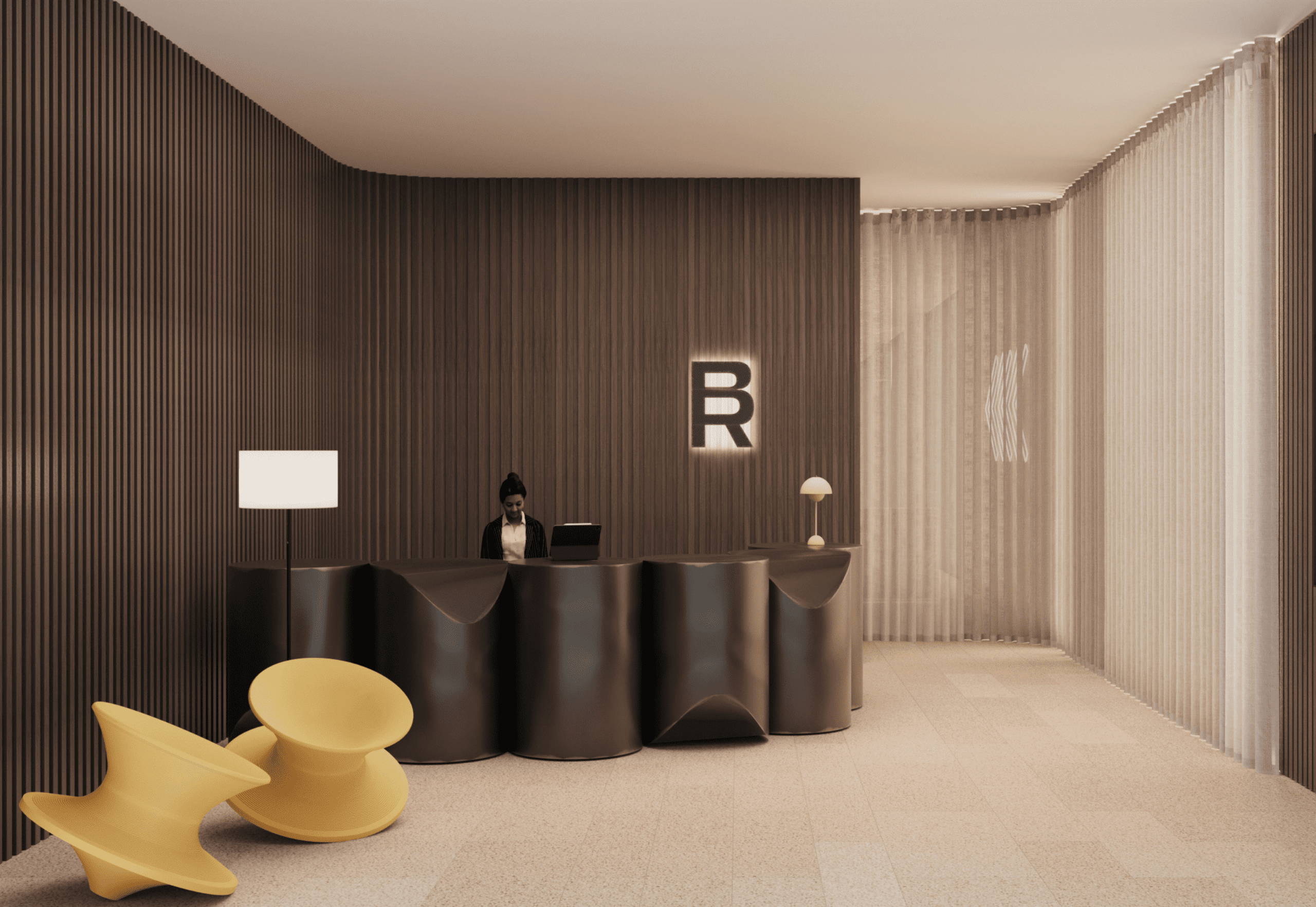
Our first project in Brazil brings together physical exercise, mental well-being and sensory design across three floors of premium wellness architecture.
Bio Ritmo São Paulo is the first project we have completed in Brazil and represents a new direction in how Contacto Atlântico approaches wellness architecture. Designed for the Bio Ritmo brand and developed in collaboration with São Paulo practice Miele Arquitetos, the space functions less like a conventional gym and more like an urban retreat: a calm, materially rich environment where physical training, mental decompression and a strong sensory experience are designed to coexist. The project carries the studio’s signature approach: contextual reading, restraint, and an emphasis on how spaces are actually inhabited.
Who is Contacto Atlântico?
Contacto Atlântico is a Portuguese architecture studio founded by architect André Caiado, with close to 30 years of activity and headquarters in Estoril. Our portfolio crosses scales and typologies: large-scale urban rehabilitation such as the Quarteirão do Rossio in Lisbon, high-end residential projects in Cascais, retail design like Nestlé The Good Store, residential landmarks like LINEA in central Lisbon, and now, with Bio Ritmo, the wellness sector in São Paulo.
What is the Bio Ritmo São Paulo project?
Bio Ritmo is a Brazilian premium gym brand. For its São Paulo location, we were asked to design a space that goes beyond the standard fitness facility and reads instead as a hospitality environment. The result is a three-floor architectural project where the programme of a high-end gym is reframed around calm, materials and considered detail. The brief was developed jointly with Miele Arquitetos, a São Paulo-based architecture practice that worked alongside us throughout.
What does “quiet luxury” mean in gym architecture?
Quiet luxury is a design concept that prioritises restraint, high-quality materials and understated detail over visible branding, bright colours and overt status signals. In fashion it appears as unbranded cashmere and tailored silhouettes; in architecture, it appears as natural materials, soft light, generous space and clean joinery, with nothing shouting for attention.
Applied to a gym, quiet luxury is a deliberate departure from the visual codes most fitness brands use: black walls, neon accents, mirror surfaces, oversized logos and constant stimulation. Bio Ritmo São Paulo was designed to do the opposite. The architectural atmosphere steps away from the overstimulation of conventional gyms in favour of serenity, timelessness and comfort.
How is the project organised?
Bio Ritmo São Paulo is spread across three floors. The programme includes:
- a reception area
- a lounge
- functional training studios
- cycling, cardio and weight training zones
- premium changing rooms
- technical areas
Beyond these expected gym components, the space integrates a series of hospitality elements that reframe what people use the building for: filtered water stations, make-up zones, and dedicated decompression areas where users can slow down before or after a workout.
What materials and design choices shape the atmosphere?
Three architectural decisions create the immersive, retreat-like quality the project is built around.
Natural materials
Wood, stone and organic textures form the material palette. These are choices that age with use rather than degrade visually, soften acoustics in a building that is otherwise mechanically noisy, and physically connect users to surfaces that feel close to nature rather than to industrial fitness equipment.
Diffuse lighting
Diffuse lighting means light spread evenly across a space, with no harsh hotspots or strong shadows, usually achieved through indirect fixtures and translucent surfaces. In a gym, where overhead spotlighting typically flattens the space and amplifies the feeling of effort, diffuse light does the opposite. It calms the visual field, reduces eye fatigue, and supports the sense of decompression that defines the project.
Fluid circulation paths
Circulation is the architectural term for the routes people take through a building. In Bio Ritmo São Paulo, those paths were designed to flow continuously between training, lounge and recovery zones, rather than separating them with corridors that interrupt the experience. This is what makes the space feel like a single environment rather than a sequence of rooms.
Why design a gym as an urban retreat?
Cities increasingly treat fitness as part of their wellness infrastructure, alongside hotels, spas and dedicated wellness clubs. A high-end gym is no longer just a place to train. It is a place where users expect the same standards of comfort, design and service they find in good hospitality. By treating Bio Ritmo São Paulo as an urban retreat, the project reframes the gym from a transactional workout space into a destination, and gives the Bio Ritmo brand a clearer architectural identity in a competitive premium market.
What does this first São Paulo project mean for Contacto Atlântico?
For Contacto Atlântico, Bio Ritmo São Paulo is a strategic step. It marks our first built project in Brazil and extends our wellness and hospitality work outside Europe. It is also evidence that the studio’s design philosophy, built across residential, urban rehabilitation and retail projects in Portugal, translates effectively into a new typology and a new market. The collaboration with Miele Arquitetos opens a working bridge between Portuguese and Brazilian architectural cultures, which we expect to be the first of many.