
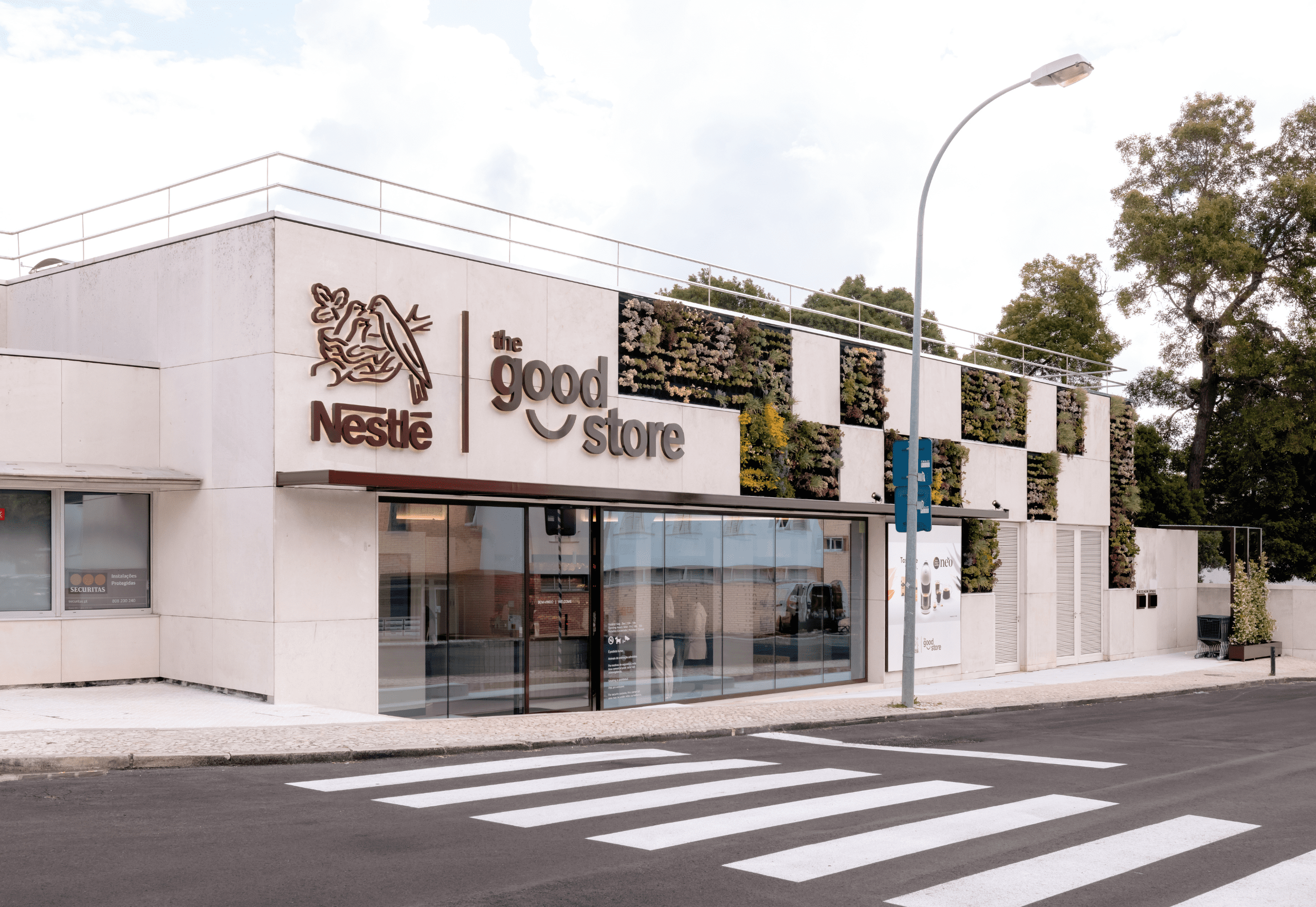
The 353 m² “Nestlé The Good Store” in Linda-a-Velha is the latest project from architect André Caiado’s studio, blending sustainability, sensory design and architecture.
Nestlé has opened its first store in Portugal accessible to the general public, and the project carries the signature of Contacto Atlântico, the Portuguese architecture studio founded by André Caiado. Named “Nestlé The Good Store”, the space occupies roughly 353 square metres at the heart of the brand’s campus in Linda-a-Velha. The project marks a new chapter for Contacto Atlântico, extending the studio’s reach from luxury residential architecture into purpose-driven retail design.
Who is Contacto Atlântico?
Contacto Atlântico is a Portuguese architecture studio founded by architect André Caiado and based in Estoril. With close to 30 years of activity, the practice covers a wide spectrum of work: large-scale urban rehabilitation (notably the Rossio Block in Lisbon, which today houses the world’s second-largest Zara store), high-end residential projects in areas like Cascais, and increasingly, retail and commercial environments. The studio operates with integrated Architecture, Interior Design and Landscape Architecture departments, which is how the Nestlé project was developed end to end.
What is “Nestlé The Good Store”?
“Nestlé The Good Store” is Nestlé’s first store in Portugal open to the public, located inside the brand’s headquarters campus in Linda-a-Velha. The space functions less like a conventional supermarket aisle and more like a brand experience: visitors can taste products, attend workshops, see new launches, and explore the Nestlé portfolio through interactive elements. The project covers about 353 m².
What makes this retail design different?
A standard retail project optimises for product visibility and traffic flow. This one was briefed differently. Contacto Atlântico designed it around the five senses, so the architecture, the materials and the technology all work together to create what the studio calls a multisensory experience.
In practice, that means three things. First, the materials palette favours sustainable choices like wood, ceramic and terrazzo with recycled glass, giving the store a warm, tactile and ecological character. Second, the layout integrates technology directly into the architecture: digital projections, interactive panels, scent diffusion and surfaces with differentiated textures. Third, the design respects the original building, preserving the existing stonework on the façade and adding a new glazed opening to bring natural light inside.
How does the living wall work?
The store features a green façade made of low-maintenance succulents, served by an automatic irrigation system. A green façade, in this case a “living wall”, is a vertical surface covered in plants that grow directly on the building’s exterior. Succulents were chosen because they retain water and tolerate Lisbon’s hot summers with minimal upkeep. The effect is twofold: it integrates the store with its outdoor environment, and it reinforces the visual idea of nature taking over the architecture, which links back to Nestlé’s positioning around food, wellness and the environment.
What is the multisensory experience inside?
Natural light is the first sense to be addressed. Skylights and glazed surfaces flood the interior, which reduces dependence on artificial lighting during the day and changes the atmosphere of the space hour by hour. Beyond light, the store layers in active sensory elements.
The tasting area lets visitors sample flavours in an immersive setting, with materials and lighting designed to focus attention on the product. Distinct zones host product launches, workshops and tasting experiences, so the same space can shift function across the week. Two central design moments anchor the brand identity: the “Nestlé” logo carved into the central concave counter, and the “Good Food, Good Life” signature engraved in marmorino, a polished lime plaster finish, on the back wall. Both add a tactile dimension to the visit.
Is the store pet friendly?
Yes. “Nestlé The Good Store” welcomes companion animals, and the Pet Food area uses an interactive projector that simulates paw prints on the floor, following visitors as they move through the section. The intent is to extend the emotional connection of the brand to pet owners who are not necessarily shopping with their animal that day.
Why does this project matter for Contacto Atlântico?
For Contacto Atlântico, the Nestlé commission is a strategic milestone. It demonstrates that the studio’s design philosophy, built over three decades on high-end residential and complex urban rehabilitation, translates effectively to retail. The same disciplines, contextual reading, material rigour, and integration of architecture, interiors and landscape, are now being applied to brand-driven spaces. It reinforces the studio’s positioning as a Portuguese architecture practice capable of delivering purpose-driven environments at the intersection of sustainability, sensory design and commercial performance.